Why Commercial Roofs Stay Flat: A Property Owner's Guide
Commercial roofs stay flat because this design minimizes material costs, maximizes usable interior space, and meets the structural demands of large building footprints. The industry term for this design is "low-slope roofing," since a truly level roof is actually a construction defect. Understanding why commercial roofs stay flat matters directly to you as a property owner or facility manager, because the design drives every maintenance decision you will make. Drainage engineering, membrane selection, and inspection schedules all trace back to this foundational choice.
Why do commercial roofs stay flat by design?
Flat commercial roofs are low-slope by design, not perfectly level. A correctly built flat roof carries a slight pitch of about 1/4 inch per foot, directing water toward internal drains or scuppers. A perfectly level roof is considered a design error that leads to premature failure. That small slope is invisible from the street but critical to the roof's function.
The engineering case for flat roofs on commercial buildings comes down to footprint size. A warehouse, retail center, or office building can cover tens of thousands of square feet. Pitching a roof across that span would require enormous structural framing, far more material, and significantly higher labor costs. Flat roofs minimize material use and keep the building's structural load predictable and manageable. That efficiency is the primary reason the design dominates commercial construction.
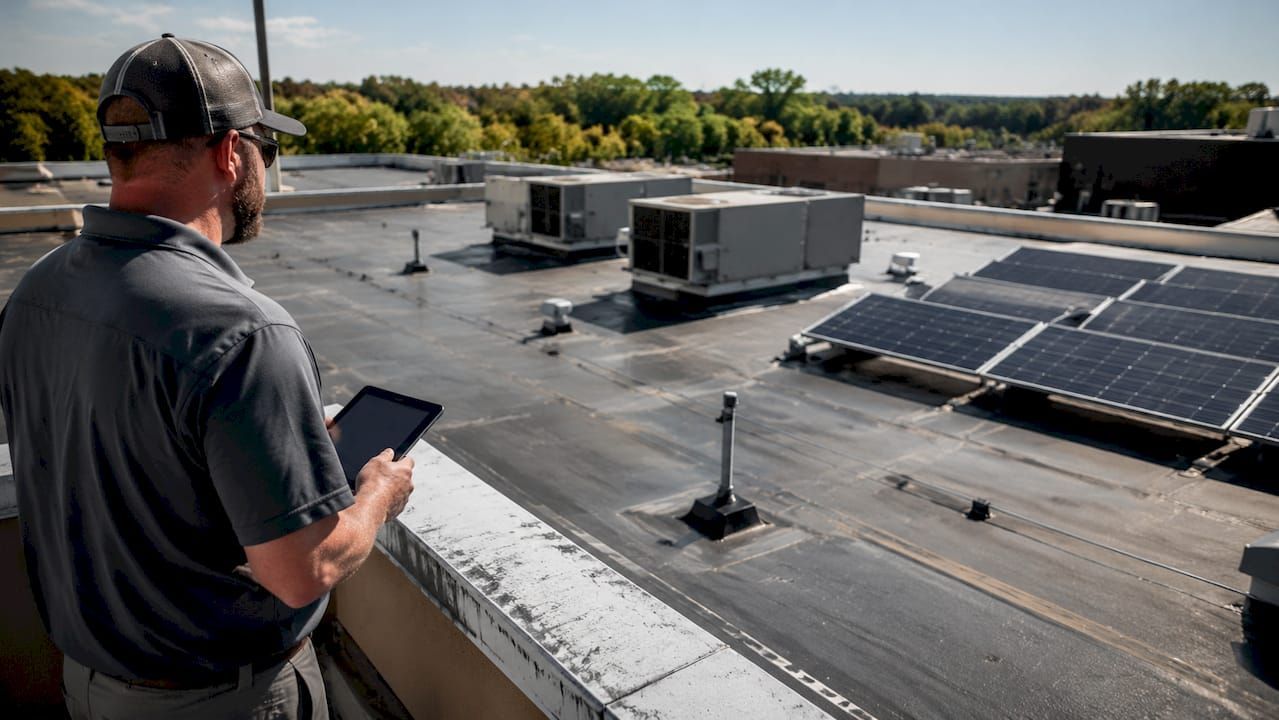
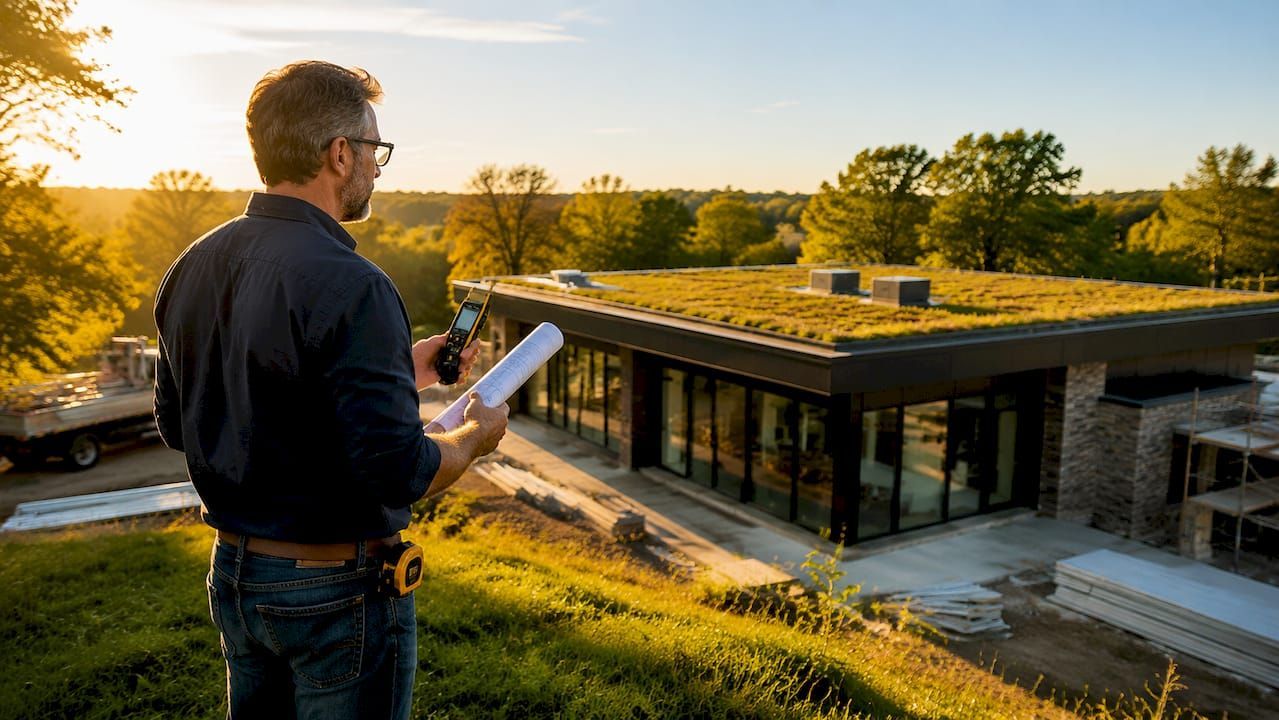
Flat roofs also create usable space that pitched roofs eliminate. HVAC units, solar panels, and mechanical equipment all sit on flat commercial rooftops without the complications of a sloped surface. This is a practical advantage that compounds over the life of a building, especially as energy systems and rooftop infrastructure grow more common.
Pro Tip: When reviewing construction plans or renovation proposals, ask your contractor to confirm the specified drainage slope. Any plan showing zero pitch should be rejected before a single membrane is installed.
What commercial roofing materials support flat roof construction?
The materials used in flat roof construction are specifically engineered to handle the stresses that a low-slope system creates. Three membrane types dominate the commercial market:
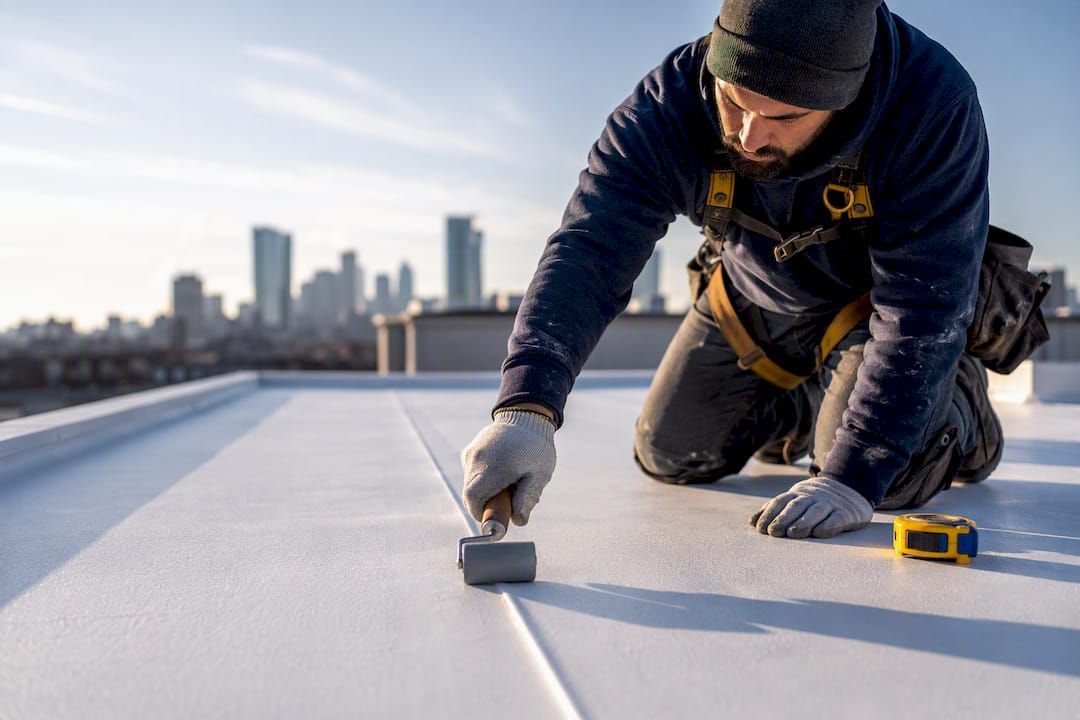
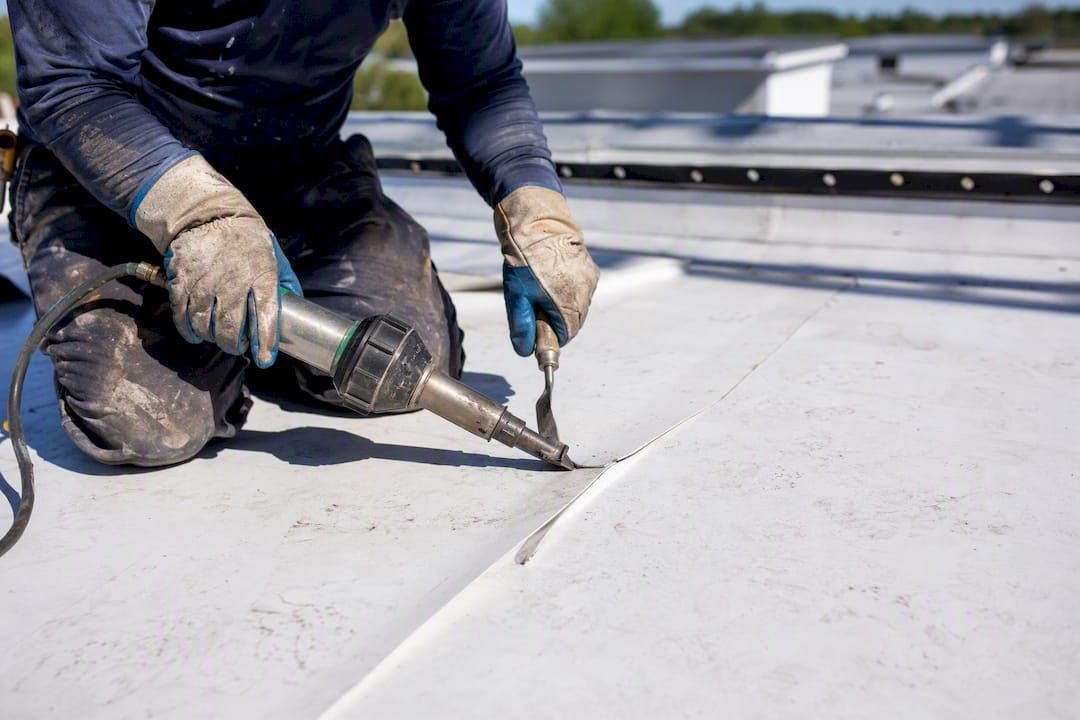
- TPO (Thermoplastic Polyolefin): A single-ply membrane heat-welded at the seams. TPO reflects UV radiation, which reduces cooling loads in warm climates. Upstateroofingpros installs TPO systems on commercial properties throughout the Sacramento and Roseville area.
- EPDM (Ethylene Propylene Diene Monomer): A synthetic rubber membrane known for flexibility in cold temperatures. EPDM handles freeze-thaw cycles well and has a long track record in commercial applications.
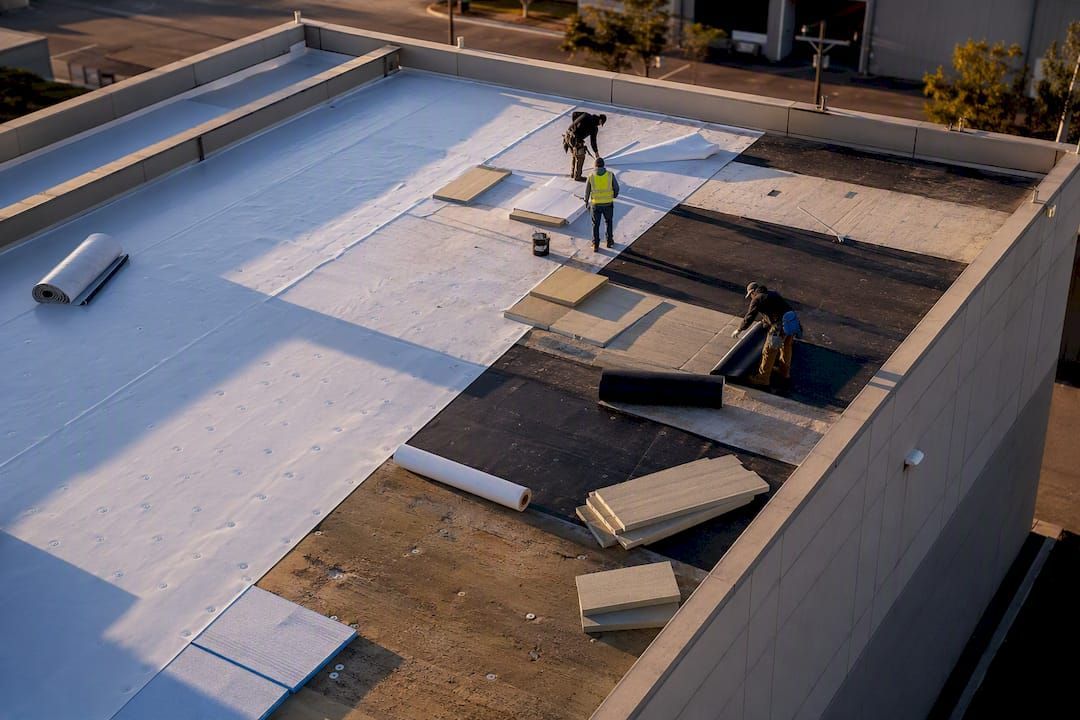
- Modified Bitumen: An asphalt-based membrane reinforced with polyester or fiberglass. It is applied in layers, giving it strong puncture resistance and redundancy against leaks.
Each of these membrane materials expands and contracts with temperature changes throughout the day and across seasons. That constant movement fatigues seams and can cause membranes to crack if the system is not maintained. Material selection directly shapes how often you will need inspections and what your long-term maintenance costs will look like.
Choosing the right membrane is not purely a cost decision. A TPO roof in Sacramento's heat performs differently than EPDM in a colder northern climate. Reviewing commercial roofing materials by durability, climate fit, and maintenance requirements gives you a clearer picture before committing to a system.
What are the main maintenance challenges for flat commercial roofs?
Flat roofs require more active maintenance than pitched roofs because they depend entirely on engineered drainage rather than gravity slope. When that drainage system is neglected, problems compound quickly.
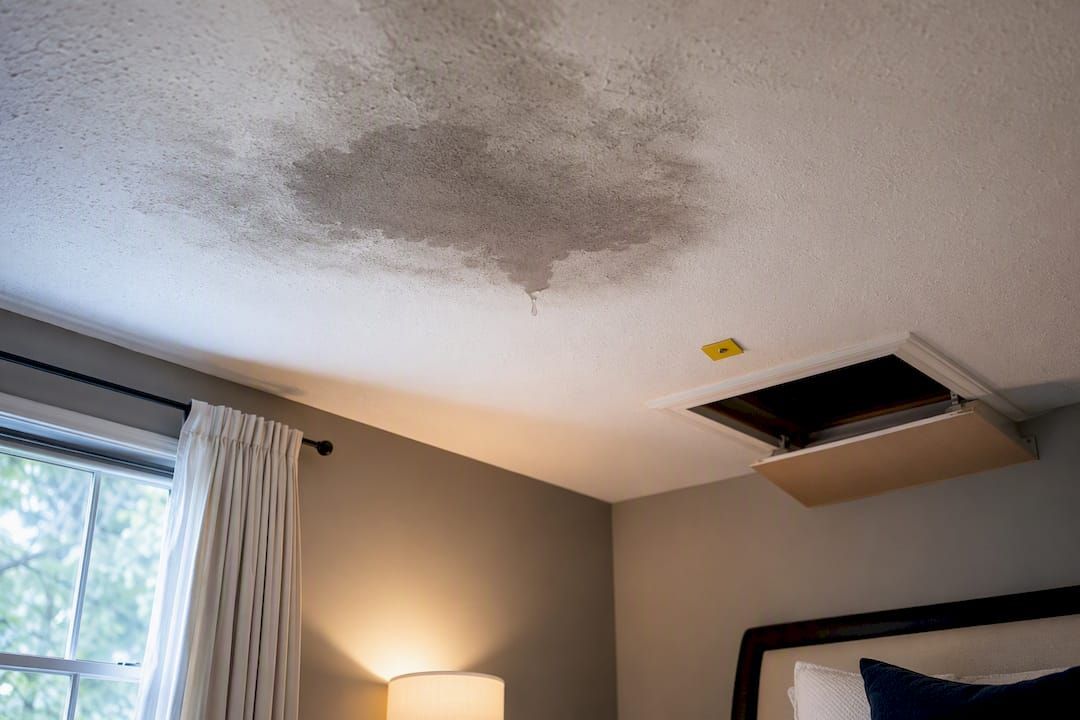
The most serious risk is ponding water. Ponding water accelerates membrane breakdown, adds structural weight, and increases leak risk. Industry data shows 65% of commercial flat roof leaks involve drainage system neglect. If water sits on the roof surface for longer than 48 hours, professional intervention is required. Waiting longer risks voiding your membrane warranty and accelerating structural damage.
Seam fatigue is the second major failure mode. Thermal expansion and contraction stress seams and flashings differently than the membrane surface itself. Experts describe flat roofs as living systems under constant mechanical stress. A seam that looks intact from a distance may be separating at the adhesive bond, allowing water to track under the membrane before any visible leak appears inside the building.
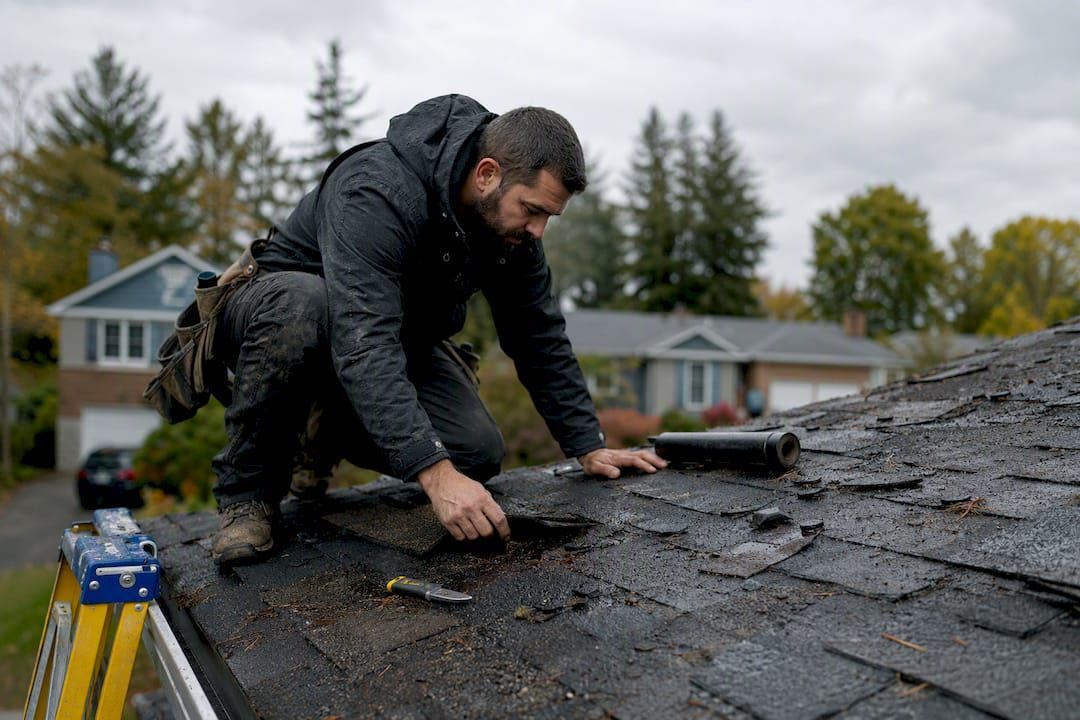
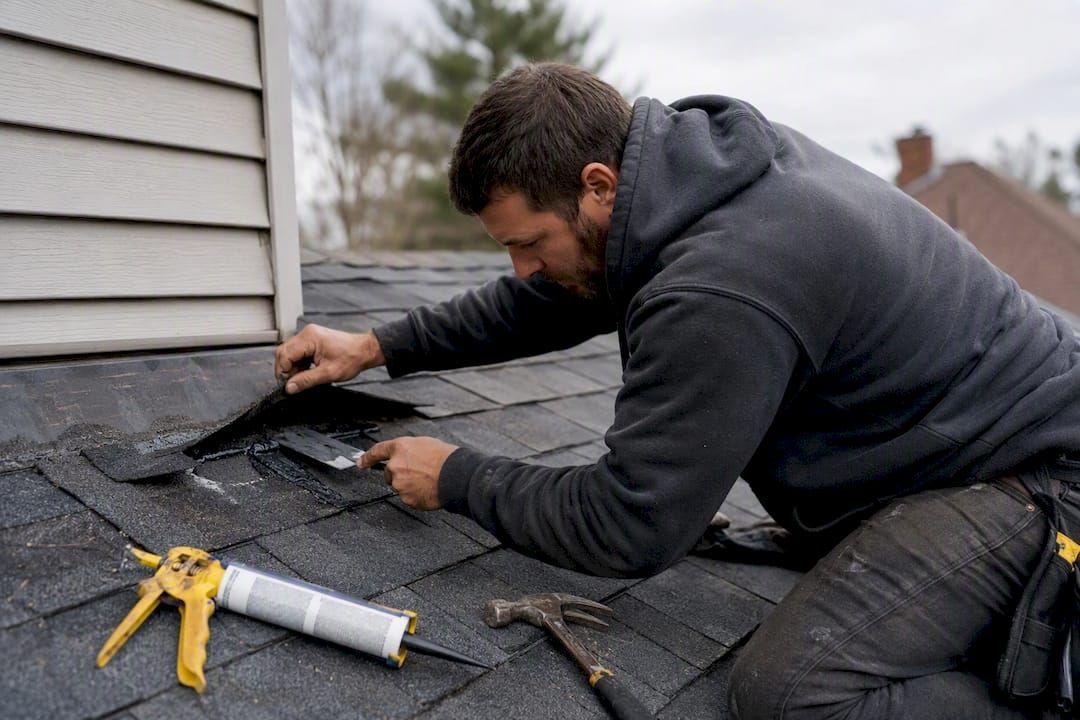
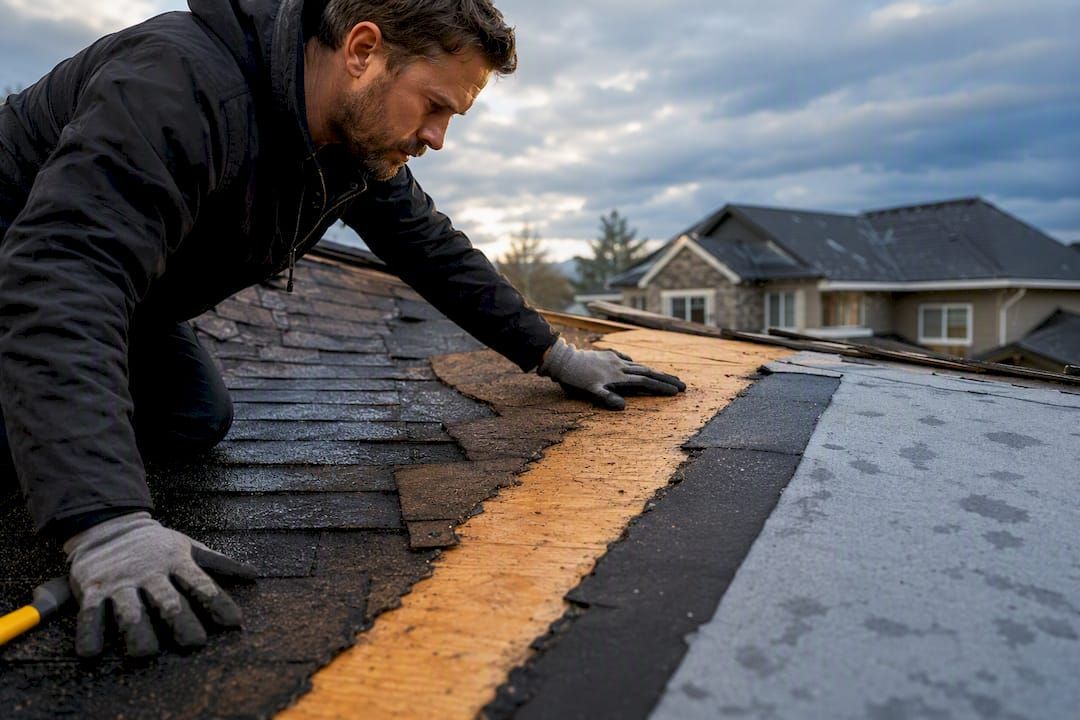
Flashing failures at parapet walls, HVAC curbs, and roof penetrations are the most common failure points on any flat commercial roof. These transitions expand and contract at different rates than the membrane, creating gaps over time. A proactive inspection schedule catches these gaps before they become interior leaks.
A practical flat roof maintenance schedule looks like this:
- Inspect twice per year. Schedule inspections in spring and fall to catch winter and summer damage before it worsens. Use the commercial roof inspection checklist to cover every critical point.
- Clear drains and scuppers after every major storm. Debris accumulates fast on flat roofs. A blocked drain turns a minor rain event into a ponding problem within hours.
- Check all flashings and seams. Pay particular attention to parapet walls, pipe penetrations, and HVAC curb edges. These are where leaks start.
- Document every inspection. Photographs and written records protect you if a warranty claim becomes necessary and help you track deterioration over time.
- Address ponding immediately. Any standing water present 48 hours after rain requires a professional assessment, not a wait-and-see approach.
Pro Tip: Add flat roof drain cleaning to your gutter maintenance schedule. The two systems work together, and neglecting one undermines the other.
How do flat roofs compare to pitched roofs for commercial buildings?
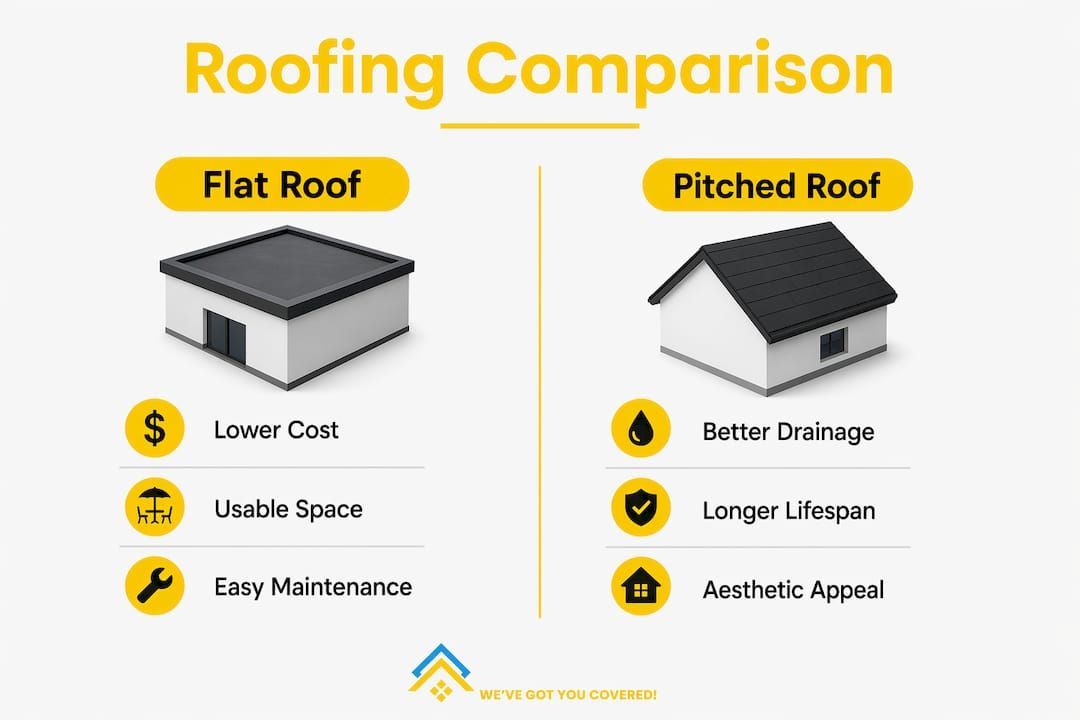
The choice between flat and pitched roofing on a commercial building involves real trade-offs across cost, maintenance, and longevity. The table below lays out the key differences.
| Factor | Flat roof | Pitched roof |
|---|---|---|
| Material cost | Lower for large footprints | Higher due to framing and volume |
| Labor cost | Lower installation complexity | Higher due to slope and access |
| Drainage | Engineered drains required | Natural gravity drainage |
| Maintenance frequency | Higher, biannual minimum | Lower, less drainage dependence |
| Usable rooftop space | High, supports HVAC and solar | Minimal, slope limits access |
| Common failure points | Seams, flashings, drains | Shingles, ridge, valleys |
| Lifespan | 20–30 years with proper care | 25–40 years depending on material |
Flat roofs require more frequent inspections than sloped roofs because drainage maintenance directly influences roof lifespan and leak prevention. Pitched roofs shed water passively, which reduces drainage risk but does not eliminate maintenance entirely. Ridge failures, valley leaks, and shingle deterioration are the equivalent failure points on sloped systems.
For most commercial buildings over 5,000 square feet, flat roofing wins on cost and practicality. The maintenance burden is manageable when you build it into your facility operations plan from day one.
Key Takeaways
Commercial roofs stay flat because low-slope design reduces material costs, supports large footprints, and enables rooftop equipment use, but that design requires active drainage maintenance and biannual inspections to prevent premature failure.
| Point | Details |
|---|---|
| Flat roofs are low-slope, not level | A correct flat roof pitches 1/4 inch per foot to direct water to drains. |
| Material choice drives maintenance needs | TPO, EPDM, and modified bitumen each expand and contract, stressing seams over time. |
| Ponding water is the top risk | Water sitting more than 48 hours requires professional intervention to prevent membrane and structural damage. |
| Flashings fail before membranes | Parapet walls and HVAC curbs are the most common leak origin points on flat commercial roofs. |
| Biannual inspections are the minimum standard | Twice-yearly inspections, plus post-storm drain clearing, are the baseline for protecting your investment. |
What I've learned after years of flat roof work
The most expensive flat roof repairs I've seen were not caused by bad materials or poor installation. They were caused by property owners who assumed "flat" meant "low maintenance." That assumption is the single most dangerous misconception in commercial roofing.
A flat roof is an active system. It moves with temperature every single day. The seams at your parapet walls are not static. They are expanding in the afternoon heat and contracting at night, year after year. When you skip an inspection cycle, you are not just deferring a task. You are letting that mechanical stress accumulate without any check on where it is winning.
The facility managers who get the longest life out of their roofs treat inspections the same way they treat fire alarm testing. It is not optional, and it is not negotiable. They also understand their drainage system well enough to know when something is off. A drain that used to clear in an hour now takes three. That change is a signal, not a coincidence.
My honest advice: read your membrane warranty before you need it. Most warranties have specific language about ponding water and inspection frequency. If you are not meeting those requirements, you may already be unprotected without knowing it. Understanding the design intent of your roof is not just academic. It is the difference between a 25-year roof and a 12-year repair bill.
— Cesar
Flat roof services from Upstateroofingpros
Upstateroofingpros works with property owners and facility managers across Sacramento and Roseville to keep commercial flat roofs performing at full capacity. Whether you are dealing with a drainage problem, a suspected membrane failure, or simply need a professional assessment before the next rainy season, the team at Upstateroofingpros has the experience to diagnose and fix it correctly.
A professional roof inspection is the fastest way to know exactly where your roof stands. If active damage is already present, Upstateroofingpros offers commercial roof repair and leak detection services to address problems before they reach the interior of your building. Protecting your roof starts with knowing what you are working with.
FAQ
Why are commercial roofs flat instead of pitched?
Commercial roofs are flat because the low-slope design reduces material and labor costs on large building footprints and creates usable rooftop space for HVAC and other equipment. Pitched roofs require significantly more framing and material volume to cover the same square footage.
Are flat commercial roofs actually completely level?
No. A correctly built flat roof has a slight slope of about 1/4 inch per foot to direct water toward drains. A perfectly level roof is a design defect that causes ponding water and premature failure.
How often should a flat commercial roof be inspected?
Flat commercial roofs require at least two inspections per year, typically in spring and fall. Drains and scuppers should also be cleared after every major storm to prevent ponding.
What causes most flat roof leaks?
The most common leak sources on flat commercial roofs are flashing failures at parapet walls, HVAC curbs, and pipe penetrations. These transitions expand and contract at different rates than the membrane, creating gaps over time.
How long does a flat commercial roof last?
A well-maintained flat commercial roof using TPO, EPDM, or modified bitumen typically lasts 20–30 years. Neglected drainage and skipped inspections are the primary reasons roofs fail well before that range.